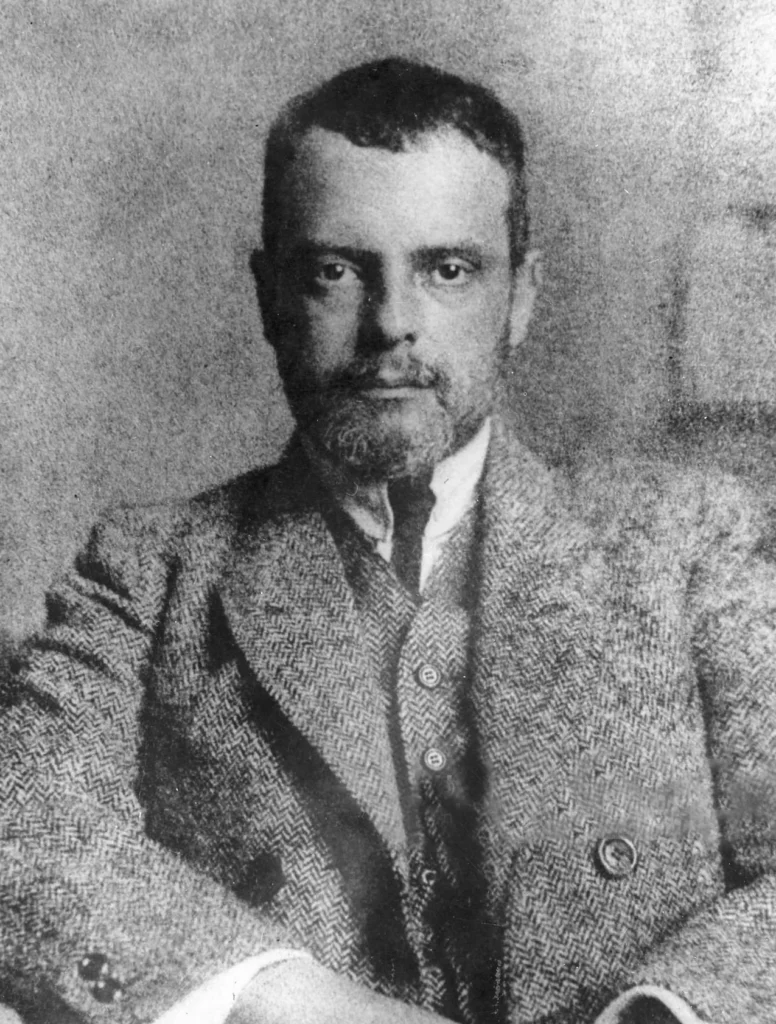

Modern art is filled with legendary names, but few artists left a mark as deep and lasting as paul klee. His paintings don’t simply decorate museum walls—they invite viewers into an imaginative world where color, music, symbols, and emotion come together in surprising ways. Even today, more than eighty years after his death, artists, designers, architects, and students continue to study his techniques and ideas.
What made paul klee different wasn’t just his distinctive style. It was the way he thought about creativity itself. He believed art wasn’t about copying reality but revealing something hidden beneath the surface. Every brushstroke, line, and color choice carried meaning. His work challenged traditional rules while remaining deeply personal, playful, and thoughtful.
Whether you’ve admired one of his famous paintings or are just discovering his work, understanding his influence helps explain why modern art looks the way it does today. Let’s explore the remarkable life, artistic journey, and lasting legacy of one of history’s most fascinating painters.
Paul Klee BIO
| Information | Details |
|---|---|
| Full Name | Paul Klee |
| Date of Birth | December 18, 1879 |
| Age | Died at age 60 (June 29, 1940) |
| Profession | Painter, Artist, Printmaker, Art Teacher |
| Nationality | Swiss-German |
| Net Worth (Approx.) | Historical estimate unavailable; artwork collectively valued in hundreds of millions today |
| Notable Works / Achievements | Twittering Machine, Castle and Sun, Senecio, Bauhaus professor, pioneer of modern art, influential color theorist |
Who Was Paul Klee?
Born near Bern, Switzerland, paul klee grew up in a family filled with music. His father taught music, and his mother was a trained singer. Before becoming a painter, Klee was an accomplished violinist. That musical background would later shape the rhythm, harmony, and balance found throughout his artwork.
As a young man, he studied art in Munich. However, his early years weren’t filled with instant success. Like many creative people, he experimented constantly while searching for his own artistic voice. Instead of following popular trends, he mixed influences from expressionism, cubism, surrealism, symbolism, and abstract art into something entirely original.
That willingness to explore made him one of the defining figures of twentieth-century art.
Early Life That Shaped a Creative Mind
Childhood often leaves fingerprints on an artist’s work, and Klee’s story proves exactly that.
Growing up surrounded by music gave him an unusual understanding of rhythm and composition. While many painters focused only on realistic subjects, paul klee approached painting almost like composing a musical piece. Every color became a note. Every shape played a role in the visual melody.
Several experiences influenced him deeply:
- His classical music education
- His travels throughout Europe
- His fascination with children’s drawings
- Ancient cultures and mythology
- Nature and organic forms
- Literature and poetry
These influences blended naturally instead of competing with one another.
The Turning Point: Discovering Color
Every great artist has a defining moment.
For paul klee, that breakthrough happened during a trip to Tunisia in 1914. The bright North African sunlight transformed the way he understood color.
He famously realized that color possessed its own independent power.
Instead of using color merely to describe objects, he began using it to express mood, movement, and emotion. This discovery changed everything about his artistic style.
From that point onward, glowing reds, luminous yellows, soft blues, and layered geometric forms became defining characteristics of his paintings.
Why Paul Klee’s Style Was Unlike Anyone Else
Trying to place paul klee into a single artistic movement is nearly impossible.
His work borrowed ideas from many directions, including:
- Expressionism
- Cubism
- Surrealism
- Abstract art
- Symbolism
- Primitivism
Yet his paintings never looked like simple copies of these styles.
Instead, they felt playful, mysterious, intellectual, and deeply emotional all at once.
Signature Elements of His Art
Several characteristics make a Klee painting instantly recognizable.
Vibrant Color
Color became the emotional heartbeat of every composition.
Delicate Lines
Instead of bold outlines, Klee often used thin, expressive lines that danced across the canvas.
Geometric Shapes
Squares, circles, triangles, and rectangles created structured yet imaginative worlds.
Symbolism
Many paintings include hidden signs, arrows, letters, faces, animals, and mysterious symbols that encourage personal interpretation.
Dreamlike Quality
Reality often blends with fantasy, creating scenes that feel both familiar and magical.
Paul Klee and the Bauhaus Revolution
One of the biggest reasons paul klee changed modern art forever was his role at the Bauhaus school.
The Bauhaus wasn’t simply an art school. It completely redefined the relationship between art, architecture, design, and craftsmanship.
Klee joined the faculty in 1921 and became one of its most respected teachers.
His classroom focused on ideas rather than imitation.
Students learned to understand:
- Visual balance
- Color harmony
- Movement
- Texture
- Composition
- Creative experimentation
- Artistic freedom
His lectures eventually became some of the most influential educational materials in modern art history.
The Philosophy Behind His Paintings
Many people assume abstract paintings have no meaning.
Klee strongly disagreed.
He believed artists reveal invisible truths instead of copying visible objects.
One of his most quoted ideas suggests that art makes the invisible visible.
That philosophy appears repeatedly throughout his paintings.
Instead of painting exactly what he saw, paul klee painted emotions, memories, dreams, imagination, spirituality, and inner experiences.
This fresh way of thinking inspired countless future artists.
Most Famous Paul Klee Paintings
Some paintings became milestones in modern art history.
Twittering Machine
Perhaps his most recognizable work, this painting combines mechanical forms with bird-like creatures.
It feels humorous, unsettling, and mysterious at the same time.
Castle and Sun
Bright geometric blocks create a colorful city beneath a radiant sun.
Its joyful palette demonstrates Klee’s mastery of color relationships.
Senecio
This portrait uses simple shapes to create a surprisingly expressive human face.
It perfectly blends abstraction with recognizable form.
Ad Parnassum
Considered one of his masterpieces, this painting consists of thousands of tiny color blocks that produce extraordinary depth and atmosphere.
How Music Influenced His Paintings
Music remained central throughout Klee’s career.
Instead of separating visual art from musical composition, he combined them.
Many historians compare his paintings to musical scores because they include:
| Musical Concept | Artistic Equivalent |
| Rhythm | Repeated patterns |
| Harmony | Balanced colors |
| Melody | Flowing lines |
| Tempo | Visual movement |
| Dynamics | Contrast between colors |
| Structure | Geometric composition |
This unique relationship helped distinguish paul klee from nearly every other painter of his era.
His Influence on Modern Art
It’s difficult to imagine twentieth-century art without paul klee.
His influence extends across numerous creative fields.
Painting
Generations of abstract painters borrowed his experimental approach to color and symbolism.
Graphic Design
His use of shapes, balance, and visual rhythm inspired designers worldwide.
Illustration
Many children’s book illustrators draw inspiration from his playful imagination.
Architecture
The Bauhaus philosophy connected painting with functional design and architecture.
Digital Art
Modern digital artists frequently recreate Klee-inspired textures, layered compositions, and geometric color systems.
Why Critics Still Admire Paul Klee
Critics continue celebrating Klee because his paintings reward repeated viewing.
A first glance may reveal colorful shapes.
A second glance uncovers hidden symbols.
Later observations often reveal emotional depth and philosophical ideas.
His artwork invites curiosity instead of offering immediate answers.
That’s a rare quality.
Challenges During His Final Years
Life wasn’t always kind to paul klee.
Political changes in Germany dramatically affected his career.
The Nazi regime labeled much modern art as “degenerate.” Many museums removed his work from exhibitions, and he eventually left Germany.
Around the same period, he developed scleroderma, a serious autoimmune disease that caused increasing physical pain.
Remarkably, even while struggling with illness, he continued creating extraordinary paintings.
His determination remains one of the most inspiring chapters of his life.
Lessons Every Creative Person Can Learn from Paul Klee
Artists aren’t the only people who can learn from Klee.
His mindset applies to almost every creative profession.
Embrace Experimentation
Innovation begins with curiosity.
Don’t Fear Mistakes
Some of Klee’s most memorable discoveries came through experimentation rather than careful planning.
Study Different Disciplines
Music, literature, philosophy, science, and nature all influenced his work.
Stay Curious
He never stopped learning.
Find Your Own Voice
Rather than copying others, Klee created something unmistakably his own.
Interesting Facts About Paul Klee
Here are several fascinating facts many people don’t know:
- He produced more than 9,000 works of art.
- He kept detailed journals documenting his artistic ideas.
- Music remained one of his greatest passions throughout life.
- His artwork combines science, mathematics, poetry, and imagination.
- Many museums dedicate permanent collections to his paintings.
- His works continue breaking auction records worldwide.
- His teaching methods still influence art education today.
Why Paul Klee Still Matters Today
More than a century after many of his greatest paintings were created, paul klee continues inspiring people across the world.
His work speaks to professional artists, students, collectors, educators, and anyone searching for creative inspiration.
In today’s digital age, where artificial perfection often dominates visual culture, Klee’s handcrafted approach feels surprisingly fresh. His imperfect lines, layered textures, and imaginative symbols remind us that creativity doesn’t require perfection—it requires honesty, curiosity, and courage.
Museums regularly feature his paintings because every generation discovers something new within them.
Whether someone approaches his work through color theory, art history, philosophy, design, or simple appreciation, the experience remains rewarding.
The Lasting Legacy of Paul Klee
Few artists reshape the direction of art itself.
Paul klee did exactly that.
By blending abstraction with emotion, geometry with imagination, and music with painting, he opened entirely new creative possibilities. His groundbreaking work at the Bauhaus helped redefine art education, while his fearless experimentation encouraged future generations to think beyond traditional boundaries.