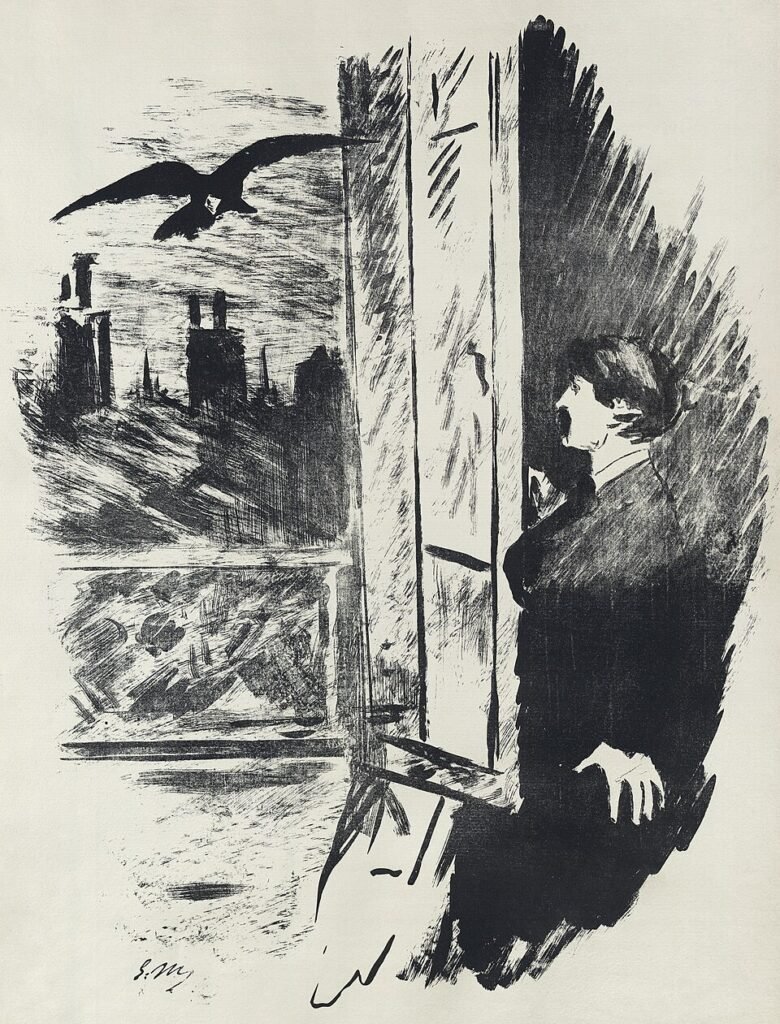

Why The Raven Poem Still Haunts Readers Today
There are poems that you read once and forget, and then there are poems like the raven poem that stay with you long after you’ve closed the book. It lingers in your thoughts, like a voice echoing in an empty room at midnight. Edgar Allan Poe didn’t just write a poem; he created an atmosphere that feels alive, dark, and strangely beautiful.
What makes the raven poem so unforgettable is not just its story, but the way it makes readers feel grief, longing, and emotional collapse in such a vivid way. Even if you read it for the first time today, it still feels modern, almost cinematic in its intensity.
In this guide, we’ll break down the raven poem, its meaning, themes, symbols, and why it continues to fascinate literature lovers around the world.
Overview of The Raven Poem
At its core, the raven poem tells the story of a grieving man who is visited by a mysterious raven late at night. The man, already suffering from the loss of his beloved Lenore, slowly descends into emotional turmoil as the raven repeats one haunting word: “Nevermore.”
The setting is simple but powerful:
- A lonely chamber
- A sleepless night in December
- A man lost in sorrow
- A mysterious bird that refuses to leave
This simplicity is what makes the raven poem so effective. It doesn’t rely on action but on psychological tension.
Background of Edgar Allan Poe and the Creation of The Raven Poem
To truly understand the raven poem, it helps to know a bit about Edgar Allan Poe himself. Poe was deeply influenced by tragedy, loss, and instability throughout his life. These emotions naturally found their way into his writing.
When Poe wrote the raven poem, he wasn’t just telling a fictional story. He was exploring real emotional states:
- Depression
- Isolation
- Fear of death
- Obsession with lost love
Many literary historians believe that the raven poem reflects Poe’s personal grief after the illness and death of loved ones.
Summary of The Raven Poem
The story of the raven poem is straightforward but emotionally layered.
A man sits alone, trying to forget his sorrow over Lenore. As he reads, he hears a tapping at his door. At first, he dismisses it, but the sound grows stronger. Eventually, a raven enters his room.
The bird settles on a bust above his door and begins to speak one word: “Nevermore.”
At first, the speaker is amused. But soon, he begins asking deeper questions:
- Will I see Lenore again?
- Can I escape my grief?
- Is there peace after death?
Each time, the raven responds with the same answer: “Nevermore.”
By the end of the raven poem, the man is completely consumed by despair, trapped in his own mind with no escape from his thoughts.
Meaning and Interpretation of The Raven Poem
The meaning of the raven poem is often debated. Some see it as a story about supernatural horror, while others interpret it as a psychological breakdown.
At its heart, the raven poem explores how grief changes the human mind. The raven may not be a real supernatural creature at all. Instead, it could represent the speaker’s inner fears.
Key interpretations include:
- The raven as a symbol of death
- The raven as a manifestation of grief
- The raven as a psychological projection
- The repetition of “Nevermore” as hopelessness
Themes in The Raven Poem
Grief and Loss
One of the strongest themes in the raven poem is grief. The speaker cannot move on from Lenore’s death. Every thought leads back to loss.
Madness and Psychological Decline
As the raven poem progresses, the narrator becomes increasingly unstable. His questions grow desperate, and his logic breaks down.
Death and the Afterlife
The idea of death is central to the raven poem. The speaker wants answers, but none are given.
Memory and Obsession
The memory of Lenore haunts the speaker. In the raven poem, memory becomes a prison rather than comfort.
Isolation and Loneliness
The setting emphasizes emotional isolation. The speaker is physically alone, but also mentally trapped.
Literary Devices Used in The Raven Poem
Edgar Allan Poe uses several powerful techniques in the raven poem:
- Repetition: “Nevermore” reinforces despair
- Alliteration: Creates musical rhythm
- Internal rhyme: Adds flow and mood
- Symbolism: The raven represents multiple meanings
- Meter and rhythm: Gives the poem a hypnotic sound
- Atmospheric tone: Dark, gothic, and emotional
These devices make the raven poem feel almost musical when read aloud.
Symbolism in The Raven Poem
The Raven
The raven is the most important symbol in the raven poem. It may represent:
- Death
- Fate
- Unanswered truth
- Psychological torment
Lenore
Lenore represents lost love and idealized memory in the raven poem.
The Chamber
The room symbolizes the speaker’s mind—closed, confined, and trapped.
The Bust of Pallas
This symbolizes wisdom, which is ironically ignored in the raven poem as emotion takes over logic.
Why The Raven Poem Still Matters Today
Even after many years, the raven poem remains relevant. Modern readers still connect with its themes because grief and loneliness are universal experiences.
In today’s world, where mental health is openly discussed, the raven poem feels even more meaningful. It shows how powerful emotions can shape perception and reality.
Students, writers, and literature lovers continue to study the raven poem because:
- It explores human psychology deeply
- It uses unforgettable symbolism
- It blends horror with poetry
- It captures emotional truth in a unique way
Common Interpretations of The Raven Poem
There are several ways people understand the raven poem:
- A supernatural encounter with a speaking bird
- A hallucination caused by grief
- A metaphor for depression
- A philosophical reflection on mortality
- A gothic love story turned tragic
Each interpretation adds another layer to the raven poem.
Conclusion: The Lasting Echo of The Raven Poem
At the end of the day, the raven poem is more than just a gothic story. It is a deep exploration of human emotion, especially grief and mental struggle. Edgar Allan Poe managed to turn personal pain into timeless art.
What makes the raven poem unforgettable is its ability to feel both simple and complex at the same time. On the surface, it’s just a man and a bird. But underneath, it is a reflection of the human mind breaking under emotional weight.