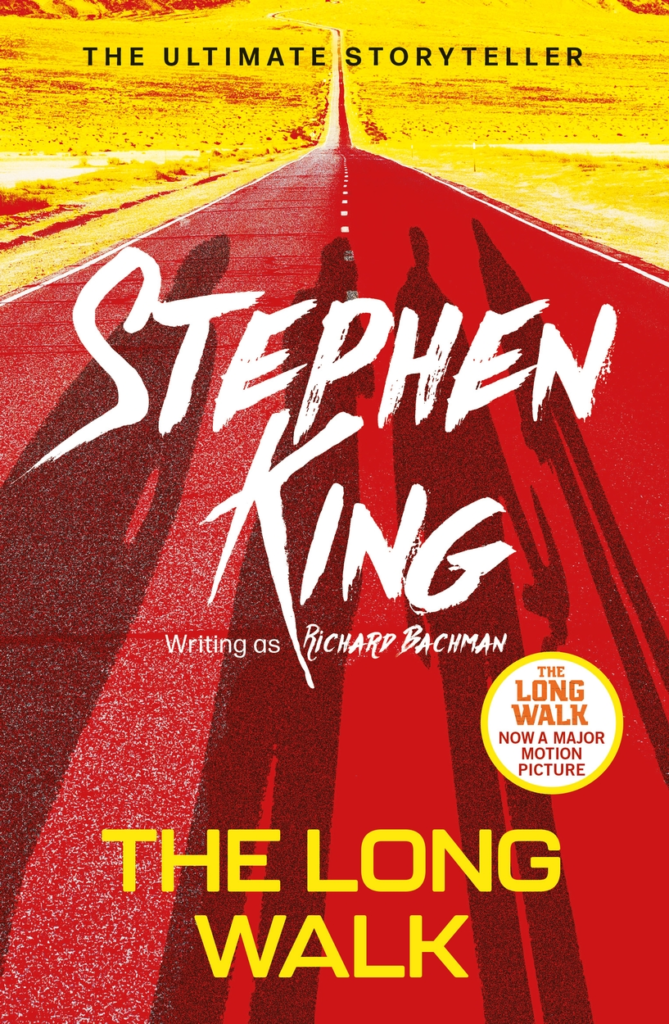

Few novels stay with readers long after the final page, but The Long Walk is one of them. On the surface, it’s a simple story about a group of teenage boys forced to walk until only one survives. Look a little deeper, however, and it becomes one of the most haunting explorations of human endurance, fear, friendship, and the cost of entertainment ever written.
Originally published under Stephen King’s pen name, Richard Bachman, The Long Walk has earned a reputation as one of the most emotionally devastating works in modern dystopian fiction. Unlike stories filled with explosions, monsters, or supernatural forces, this novel builds tension through something incredibly ordinary—walking. That simplicity is exactly what makes it unforgettable.
In this guide, we’ll break down The Long Walk, explore its major themes, examine the characters, uncover its hidden symbolism, and explain the ending in detail.
What Is The Long Walk About?
The Long Walk is a dystopian novel set in an alternate version of America ruled by a military dictatorship. Every year, one hundred teenage boys volunteer to participate in a deadly competition known as the Long Walk.
The rules appear straightforward:
- Walk continuously.
- Maintain a speed of at least four miles per hour.
- Receive warnings if you slow down.
- After three warnings, you’re eliminated permanently.
- The last person still walking wins.
The prize is almost beyond imagination: anything the winner wants for the rest of his life. Wealth, power, security, and fame all await the survivor.
The catch?
Ninety-nine contestants die.
From the opening chapter, readers understand there will be only one winner. The suspense doesn’t come from wondering if people will die, but when, how, and what happens to those left behind.
Background of the Novel
Published in 1979, The Long Walk was actually written years earlier, making it one of Stephen King’s earliest completed novels.
Writing as Richard Bachman allowed King to experiment with darker psychological storytelling. While many readers know him for horror classics like It or The Shining, this novel contains very little traditional horror.
Instead, its terror comes from:
- Psychological pressure
- Physical exhaustion
- Moral compromise
- Government oppression
- Human nature under extreme stress
Today, many fans consider The Long Walk among King’s finest achievements.
Why Is The Long Walk So Different?
Unlike many dystopian novels, there are:
- No elaborate rebellions
- No chosen hero
- No secret revolution
- No magical solution
Instead, the novel asks a terrifying question:
How long can ordinary people endure suffering before losing themselves?
That focus on realism makes every chapter increasingly uncomfortable.
Main Characters
Ray Garraty
Ray Garraty serves as the story’s protagonist.
He’s thoughtful, compassionate, and surprisingly optimistic considering the circumstances. Rather than trying to dominate others, Garraty builds friendships along the route.
His emotional journey matters just as much as his physical one.
Peter McVries
McVries quickly becomes one of the novel’s most memorable characters.
Smart, sarcastic, and emotionally complex, he often questions the purpose of the competition itself.
Many readers view McVries as the moral center of The Long Walk.
Arthur Baker
Baker represents quiet determination.
He isn’t flashy or outspoken, but his resilience earns respect from both competitors and readers.
Hank Olson
Olson illustrates what happens when confidence turns into arrogance.
His early bravado slowly disappears as fatigue overwhelms him.
Stebbins
Stebbins remains mysterious throughout much of the novel.
Calm, distant, and oddly confident, he rarely reveals his true motivations until the story reaches its emotional climax.
The Rules That Create Constant Tension
The brilliance of The Long Walk lies in its deceptively simple rules.
Contestants must:
| Rule | Description |
|---|---|
| Minimum speed | Four miles per hour |
| Warnings | Three before elimination |
| Rest | Not allowed |
| Winner | Last walker alive |
| Prize | Anything desired for life |
These rules create endless suspense because every stumble, cramp, or moment of hesitation can become fatal.
Readers constantly imagine themselves asking:
“Could I survive even one day?”
Most people probably couldn’t.
Themes in The Long Walk
Survival at Any Cost
The most obvious theme is survival.
Each contestant starts with hope.
Eventually, survival becomes the only thing that matters.
Friendships begin to compete with self-preservation.
Compassion battles instinct.
The novel repeatedly asks whether staying alive is worth sacrificing your humanity.
The Loss of Innocence
The competitors are teenagers.
By the end, they have experienced more trauma than most adults ever will.
The Long Walk forces them into adulthood almost instantly.
Their innocence disappears mile after mile.
Government Control
The Major represents absolute authority.
His government controls entertainment, fear, and even death.
Citizens cheer while children die.
This isn’t simply dictatorship.
It’s dictatorship disguised as celebration.
Entertainment and Violence
Perhaps the novel’s strongest message concerns spectators.
Crowds gather along highways.
Families cheer.
People celebrate suffering as though it’s a sporting event.
This criticism feels surprisingly modern.
Reality television, social media outrage, and viral spectacles all raise uncomfortable questions about why audiences enjoy watching others struggle.
Friendship Under Pressure
Despite impossible circumstances, genuine friendships emerge.
Garraty and McVries develop mutual respect.
The boys laugh together.
Share stories.
Comfort one another.
These relationships become emotional lifelines.
Ironically, the friendships make every death even more heartbreaking.
Symbolism Throughout the Story
The Road
The endless highway symbolizes life itself.
No one can stop moving.
Everyone grows tired.
Everyone eventually reaches an end.
The road never changes.
The people walking it do.
Walking
Walking represents persistence.
Every step requires choice.
Continue.
Or give up.
The novel reminds readers that survival often depends on taking one more step.
Shoes
Throughout The Long Walk, footwear becomes increasingly important.
Blisters.
Bleeding.
Destroyed soles.
Shoes symbolize preparation, endurance, and the limits of the human body.
The Crowd
The cheering spectators symbolize society’s willingness to ignore suffering when it becomes entertainment.
Their applause is almost as frightening as the competition itself.
Psychological Pressure
Physical exhaustion is only half the battle.
Sleep deprivation causes hallucinations.
Fear destroys confidence.
Grief weakens concentration.
Every death affects those still walking.
Stephen King brilliantly shows that mental fatigue often arrives before physical collapse.
Character Development
One reason readers remember The Long Walk is its realistic dialogue.
The contestants discuss:
- Family
- Love
- Dreams
- Childhood
- Regrets
- Future plans
Ironically, they speak about the future while knowing most of them won’t live to see tomorrow.
That contrast creates heartbreaking emotional depth.
The Ending Explained
The ending of The Long Walk has sparked debate for decades.
After unimaginable physical and emotional suffering, Garraty becomes the last walker remaining.
Technically, he wins.
Yet victory doesn’t feel like victory.
He’s exhausted beyond comprehension.
Almost everyone he befriended has died.
The prize suddenly seems meaningless.
In the novel’s final moments, Garraty appears to see a mysterious dark figure ahead of him and instinctively continues walking toward it.
What Does the Dark Figure Mean?
Stephen King intentionally leaves the ending open to interpretation.
Several possibilities have emerged over the years.
1. Death
The most common interpretation is that the figure represents death itself.
After days without sleep, food, or emotional stability, Garraty simply can’t stop walking.
His journey ends not with celebration but acceptance.
2. Hallucination
Extreme exhaustion causes severe hallucinations.
The figure could exist only in Garraty’s mind.
His brain has finally reached its limit.
3. Endless Survival
Another interpretation suggests the competition never truly ends.
Even after winning, Garraty remains psychologically trapped.
He’s conditioned to keep moving because stopping has meant death for so long.
4. Loss of Identity
Some readers believe Garraty has lost himself completely.
Winning required sacrificing so much that the person who began the walk no longer exists.
The ending becomes symbolic rather than literal.
What Makes the Ending So Powerful?
Many stories provide clear answers.
The Long Walk doesn’t.
Instead, it trusts readers to decide.
That ambiguity keeps the novel alive in discussions decades after publication.
Great literature often asks questions rather than providing solutions.
This ending does exactly that.
Lessons Readers Can Take Away
Although The Long Walk is fictional, its themes remain surprisingly relevant.
Some of its lasting lessons include:
- Success can come at an enormous personal cost.
- Society should question entertainment built on suffering.
- Friendship provides strength during hardship.
- Governments should never gain unchecked power.
- Mental endurance can be as important as physical strength.
- Survival alone isn’t always the same as living.
Why The Long Walk Still Matters Today
More than forty years after publication, The Long Walk continues to attract new readers because its ideas remain timeless.
Modern audiences recognize familiar issues throughout the story:
- Public fascination with competition
- Media sensationalism
- Political control
- Social pressure
- Mental health struggles
- Isolation
- The pursuit of success at any cost
These themes ensure the novel never feels outdated.
Final Thoughts
The Long Walk is far more than a story about a deadly contest. It’s a profound examination of fear, endurance, friendship, authority, sacrifice, and what it truly means to survive. By stripping away supernatural monsters and relying instead on ordinary human limits, Stephen King created a novel that feels disturbingly believable.
Every mile traveled by Garraty and the other contestants reveals another layer of the human experience. The friendships they build, the choices they make, and the unbearable cost of reaching the finish line all combine to create a story that lingers long after the final chapter.